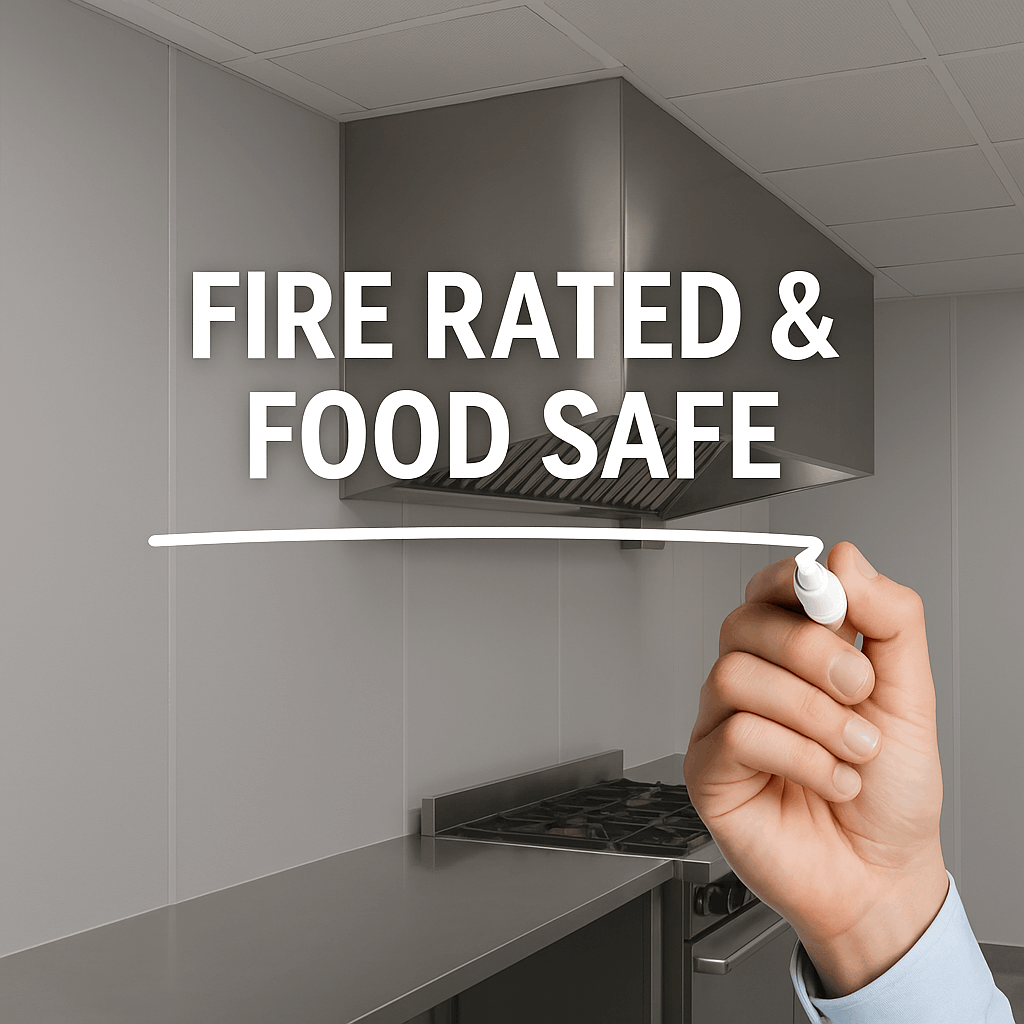
Fire Rated & Food Safe Cladding
Fire rated and food safe cladding is a critical requirement in many commercial, industrial, and public-sector environments. In spaces such as commercial kitchens, food processing facilities, healthcare buildings, schools, and manufacturing areas, wall and ceiling materials must meet strict safety standards — not only for hygiene, but also for fire performance.
Fire rated cladding is designed to limit the spread of flame and smoke in the event of a fire. Unlike standard wall finishes, fire-rated PVC or metal cladding systems are tested to recognised classifications that assess how materials react to fire, including flame spread, heat release, and smoke production. Choosing the correct fire-rated system can significantly improve building safety and help meet building regulations and insurance requirements.
In commercial kitchens, fire risk is an everyday consideration. Heat, open flames, electrical equipment, and grease build-up all increase the potential for fire incidents. Fire rated wall and ceiling cladding helps reduce this risk by providing surfaces that are more resistant to ignition and less likely to contribute to fire spread.
Food safe cladding focuses on hygiene and contamination control. Materials used in food environments must be non-toxic, non-absorbent, and easy to clean, ensuring they do not contaminate food or harbour bacteria. PVC hygienic cladding and metal wall cladding are widely used in food-safe environments because they meet these requirements when correctly specified and installed.
Fire rated and food safe properties often go hand in hand. For example, aluminium and stainless steel cladding provide excellent fire resistance while also offering smooth, non-porous surfaces suitable for food preparation areas. Certain PVC cladding systems are also manufactured to achieve fire performance classifications while retaining their hygienic characteristics.
It’s important to understand that not all cladding is automatically fire rated or food safe. Product certification, testing data, and manufacturer specifications should always be reviewed during the design and procurement stage. Using uncertified materials can lead to compliance issues, failed inspections, and increased liability.
Installation quality plays a key role in maintaining both fire and food safety performance. Panels must be fixed securely, joints sealed correctly, and trims installed to eliminate gaps where grease, moisture, or contaminants can accumulate. Poor installation can compromise even the best-rated materials.
Fire rated and food safe cladding also contributes to long-term operational efficiency. Durable, easy-clean surfaces reduce maintenance demands, support regular deep cleaning, and help facilities remain inspection-ready. In the event of refurbishment or expansion, compliant cladding systems simplify approval processes.
At Cladding4Less, we understand the importance of safety-led specification. Our range includes hygienic cladding systems suitable for food environments, as well as materials that support fire performance requirements where applicable. We always recommend confirming fire ratings and food safety suitability based on the specific application and regulatory context.
For businesses operating in regulated environments, fire rated and food safe cladding is not optional — it is a fundamental part of responsible design and risk management. By selecting appropriate materials and ensuring professional installation, facilities can protect staff, customers, and assets while maintaining clean, compliant interiors.