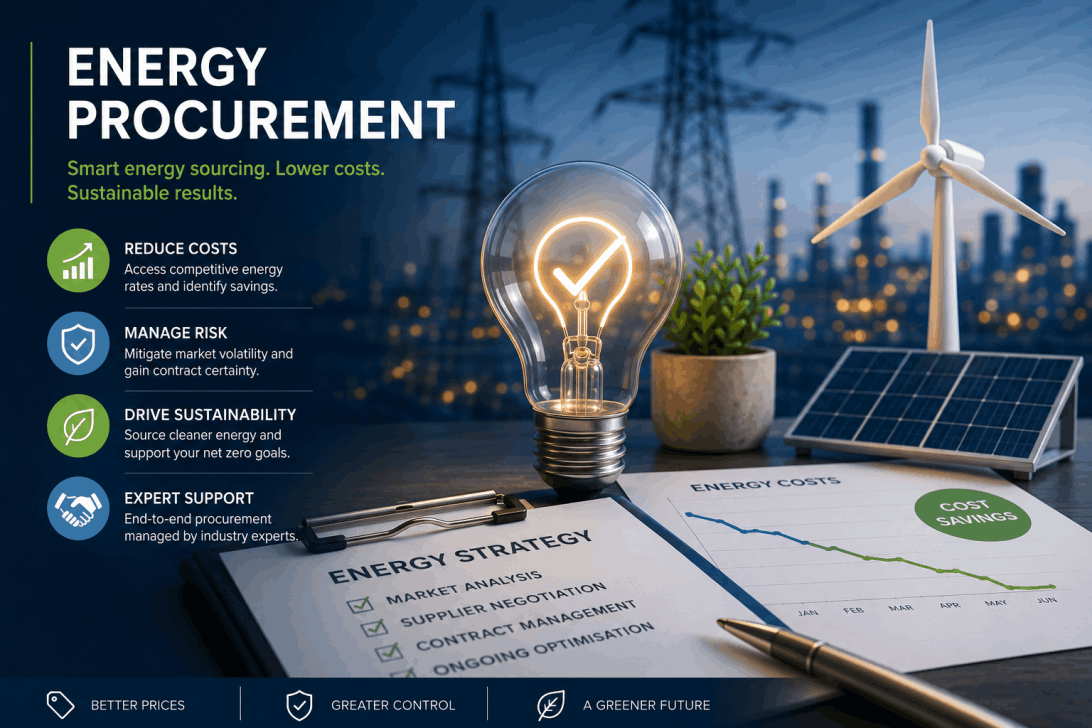
Utility Procurement: How Smart Procurement Strategies Help Businesses Reduce Costs
Managing business utilities has become increasingly complex in recent years. Rising wholesale prices, changing regulations, and greater emphasis on sustainability mean organisations must take a more strategic approach to purchasing electricity, gas, water, and other essential services. Simply allowing utility contracts to renew automatically can often result in businesses paying considerably more than necessary. A proactive procurement strategy helps organisations gain greater control over costs while improving long-term operational efficiency.
For businesses reviewing Utility Procurement, the process extends far beyond obtaining the lowest available price. Effective utility procurement involves understanding consumption patterns, assessing market conditions, comparing suppliers, negotiating favourable contract terms, and identifying opportunities to reduce overall usage. By taking a structured approach, businesses can improve budgeting, reduce financial risk, and ensure their utilities support long-term business objectives.
Every organisation has unique utility requirements depending on its size, industry, operating hours, and facilities. A small office may only require modest electricity and water supplies, while manufacturing facilities, healthcare providers, schools, hotels, and large commercial premises often have complex utility demands. Understanding how your organisation consumes electricity, gas, and water is the first step towards building an effective procurement strategy.
Analysing historical consumption data provides valuable insight into usage patterns throughout the year. Businesses can identify periods of peak demand, seasonal fluctuations, and areas where consumption may be unnecessarily high. These insights not only support better procurement decisions but also highlight opportunities to improve efficiency through operational changes or equipment upgrades.
One of the key benefits of utility procurement is access to competitive supplier comparisons. Rather than relying solely on renewal offers from existing providers, businesses can evaluate multiple suppliers and contract options to secure the most suitable agreement. This competitive approach often leads to significant savings while ensuring contract terms better reflect the organisation's operational requirements.
Timing also plays an important role in procurement. Utility markets are constantly changing, with prices influenced by global energy markets, government policies, weather conditions, and supply chain factors. Businesses that begin reviewing contracts well before renewal dates often have greater flexibility to secure competitive pricing rather than being forced into last-minute decisions.
Contract selection is another important consideration. Fixed-price agreements provide certainty by locking in rates for a defined period, making financial planning easier and protecting businesses from sudden market increases. Flexible procurement strategies allow larger organisations to purchase utilities in stages throughout the contract period, potentially taking advantage of favourable market conditions. The right solution depends on the organisation's size, consumption levels, and attitude towards financial risk.
Supplier performance should be evaluated alongside pricing. Reliable customer service, accurate billing, dedicated account management, and responsive support can save organisations considerable time throughout the life of a contract. Businesses should consider the overall quality of service rather than focusing solely on headline prices when selecting utility providers.
Many organisations are now incorporating sustainability into their procurement decisions. Renewable electricity contracts, carbon reduction initiatives, water conservation programmes, and environmental reporting all contribute towards wider corporate sustainability objectives. Customers, employees, and investors increasingly expect businesses to demonstrate environmental responsibility, making sustainable utility procurement an important commercial consideration.
Reducing consumption is equally as valuable as negotiating lower prices. Procurement reviews often identify opportunities to improve efficiency by upgrading lighting systems, installing smart building controls, improving insulation, reducing water waste, or replacing inefficient equipment. These improvements generate ongoing savings while helping businesses reduce their environmental impact.
Technology has transformed utility management in recent years. Smart meters, automated monitoring systems, and cloud-based reporting platforms provide real-time visibility into utility consumption. Businesses can identify abnormal usage quickly, monitor trends across multiple sites, and use detailed reporting to support better procurement decisions in future contract negotiations.
For organisations operating from several locations, consolidating utility procurement can deliver significant benefits. Managing contracts centrally simplifies administration, strengthens purchasing power, and enables businesses to negotiate improved commercial terms across multiple sites. It also creates greater consistency in supplier management and utility reporting throughout the organisation.
Many businesses choose to work with independent utility procurement specialists who monitor market conditions throughout the year. Their experience in supplier negotiations, market analysis, and contract management often enables organisations to secure more favourable agreements while avoiding common procurement pitfalls. This expertise can be particularly valuable for businesses with complex utility requirements or large energy consumption.
Utility procurement should never be viewed as a one-off exercise completed every few years. Regular contract reviews, ongoing market monitoring, and continuous assessment of consumption patterns allow businesses to remain competitive while adapting to changing operational needs. Organisations that actively manage their utilities are often better positioned to control costs and respond to future market developments.
Ultimately, Utility Procurement is about creating a long-term purchasing strategy that balances cost, service quality, efficiency, and sustainability. Businesses that understand their utility usage, compare suppliers carefully, invest in efficiency improvements, and review contracts regularly are well placed to reduce operating costs while supporting future growth. As utility markets continue to evolve, adopting a proactive procurement strategy remains one of the most effective ways to improve financial performance and operational resilience.